
Water losses come from burst supply lines, failed water heaters, roof leaks, appliance hoses and the water used to fight a fire. However it arrived, the repair has the same shape: stop the water, dry the structure, then rebuild. FMGC does the extraction, the drying and the rebuild.
Extraction and drying
Standing water comes out first. Then air movers and dehumidifiers go in, and moisture readings are taken on a schedule and logged until the structure reaches its dry target. That log is the record your adjuster will want, and it decides which materials can stay.
Because the same contractor dries and rebuilds, the rooms are planned once: which materials come out, which are dried in place, and what order the rebuild follows. If your insurer has already assigned a drying vendor, we work from that vendor's moisture log instead.
Replaced or dried: how that call gets made
Water losses are classified by how clean the water was at the source: clean supply water, water with some contamination such as appliance discharge, or grossly contaminated water such as sewage or floodwater. The classification, together with how long the materials sat wet, drives most of the decisions.
- Usually dried and kept: framing lumber, concrete slabs, solid trim and many hard, non-porous surfaces, once they read dry.
- Usually removed and replaced: carpet cushion, batt insulation, saturated or stained drywall, swollen laminate, and particleboard cabinet bases.
- Case by case: hardwood floors, carpet, baseboard and plaster.
- Removed after contaminated water: porous materials that touched sewage or floodwater are generally discarded rather than cleaned.
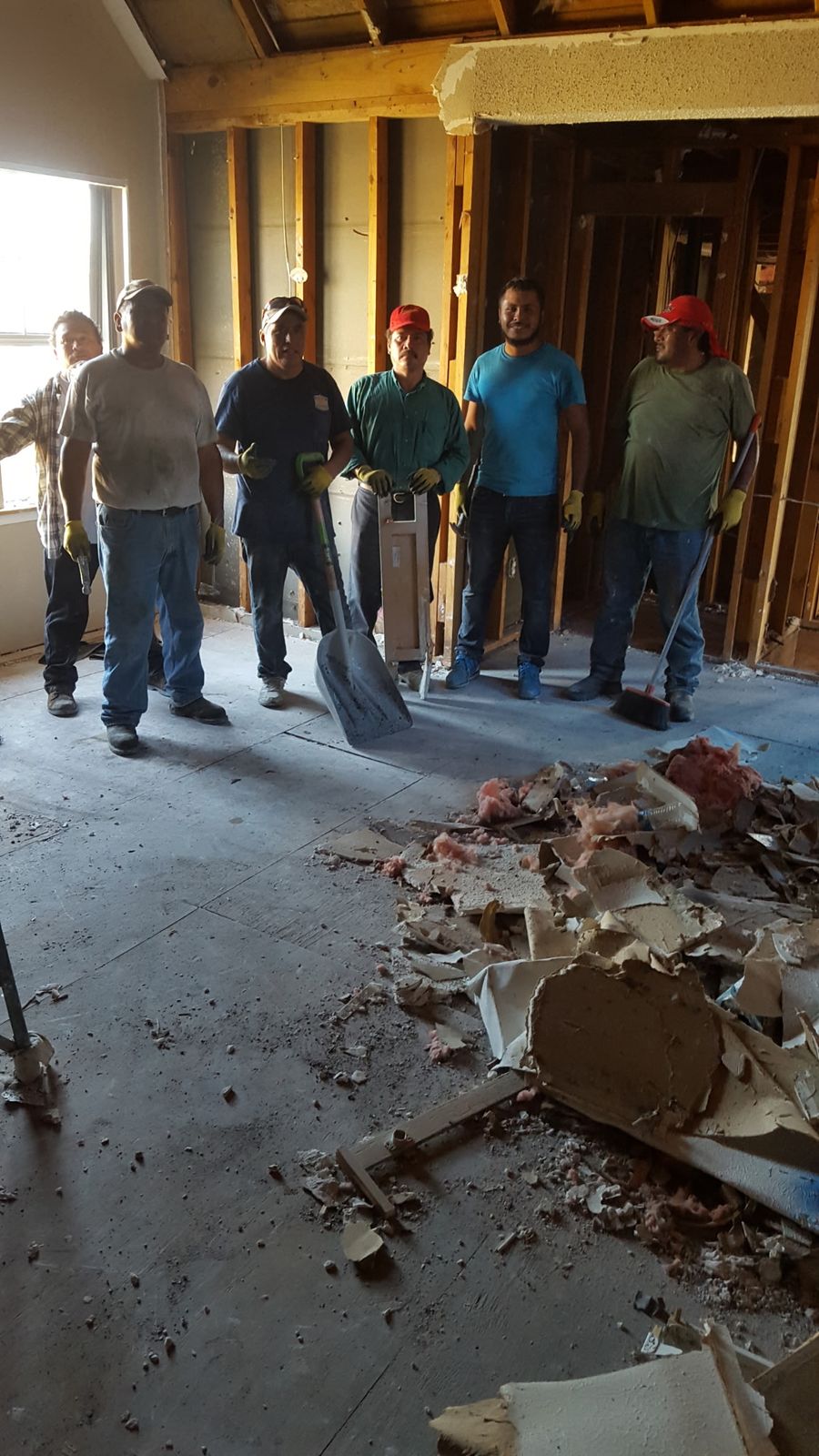
Why a moisture check comes before closing the wall
A wall can feel dry and still hold water inside. Drywall paper looks fine while the stud behind it is wet, and insulation can stay damp at the bottom plate for weeks. Close that wall and the moisture has nowhere to go. The usual results are swelling trim, peeling paint, a musty smell, and conditions where mold can start.
So the check is simple and non-negotiable. Moisture meters are read at several points on the framing and on the slab, and the readings are compared with a dry reference reading from an unaffected part of the same building. The numbers go in the file. If any area is still high, it gets more drying time, and the schedule moves.
The rebuild, in order
- Confirm dry readings and, where needed, any mold clearance.
- Repair framing and subfloor that cannot be saved.
- Install new insulation and have it looked at before covering.
- Hang, tape and finish drywall. Cut lines are staggered so patches do not telegraph.
- Prime and paint. A repaired area often needs the whole wall repainted so the finish reads uniform.
- Install flooring after confirming the slab or subfloor is dry and flat enough for the product.
- Set baseboard, door casings and cabinet kick plates, then touch up.
Flooring deserves its own caution. Wood and many vinyl products are sold with moisture limits for the surface beneath them. Installing over a damp slab can void the manufacturer's coverage and cause cupping or adhesive failure, so we read the slab before we order material.
Ceilings, roofs and the source of the water
When the cause is a roof leak, the roof must be repaired before interior finishes, or the same stain returns. FMGC does roof repair as part of the rebuild. If the cause was a plumbing failure, a plumber repairs the line and the permit trail for that work is theirs. Either way, we ask for confirmation that the source is fixed before painting.
What drives the cost and the schedule
We do not publish prices, because a typical range without seeing the rooms would mislead you. The factors that move a bid are the square footage of affected wall and floor, whether cabinets and built-ins were involved, the finish level you are matching, the age of the building, and how long the water sat. Itemized bids show each of those as a separate line.
Common questions
- Does FMGC dry out the house after a leak or flood?
- Yes. FMGC does water extraction and structural drying, then the rebuild, so one contractor carries the job from wet to finished. If your insurer has already assigned a drying vendor, we work from that vendor's moisture records instead.
- What if mold shows up when the wall is opened?
- Work in that area stops. Texas licenses mold assessment and mold remediation, and FMGC does neither. A licensed professional handles it, and the rebuild resumes afterward.
- Do all wet walls have to be torn out?
- Not always. It depends on what the water was, how long materials were wet, and whether the materials can be dried and checked. The moisture readings taken during drying drive that decision.