
What FMGC does, from the first call to the finished room
The first hours belong to the fire department and your insurer. Then the property has to be stabilized: openings boarded, the roof tarped, standing water pulled out and the structure dried. FMGC does that work. Then comes the long part: deciding what is salvageable, taking out what is not, and building the rooms back.
- Emergency board-up and roof tarping so the structure is closed against weather and trespass.
- Water extraction and structural drying, with moisture readings logged for your adjuster.
- Demolition of damaged finishes: burned or wet drywall, insulation, trim, flooring and ceilings.
- Framing repair where studs, joists or rafters are charred, cut or replaced.
- New insulation (coordinated with the other trades), drywall, texture and paint.
- Flooring, finish carpentry, doors and cabinets set back in place.
- Roof repair where fire, firefighting, storm or hail damaged the roof, on homes and commercial buildings.
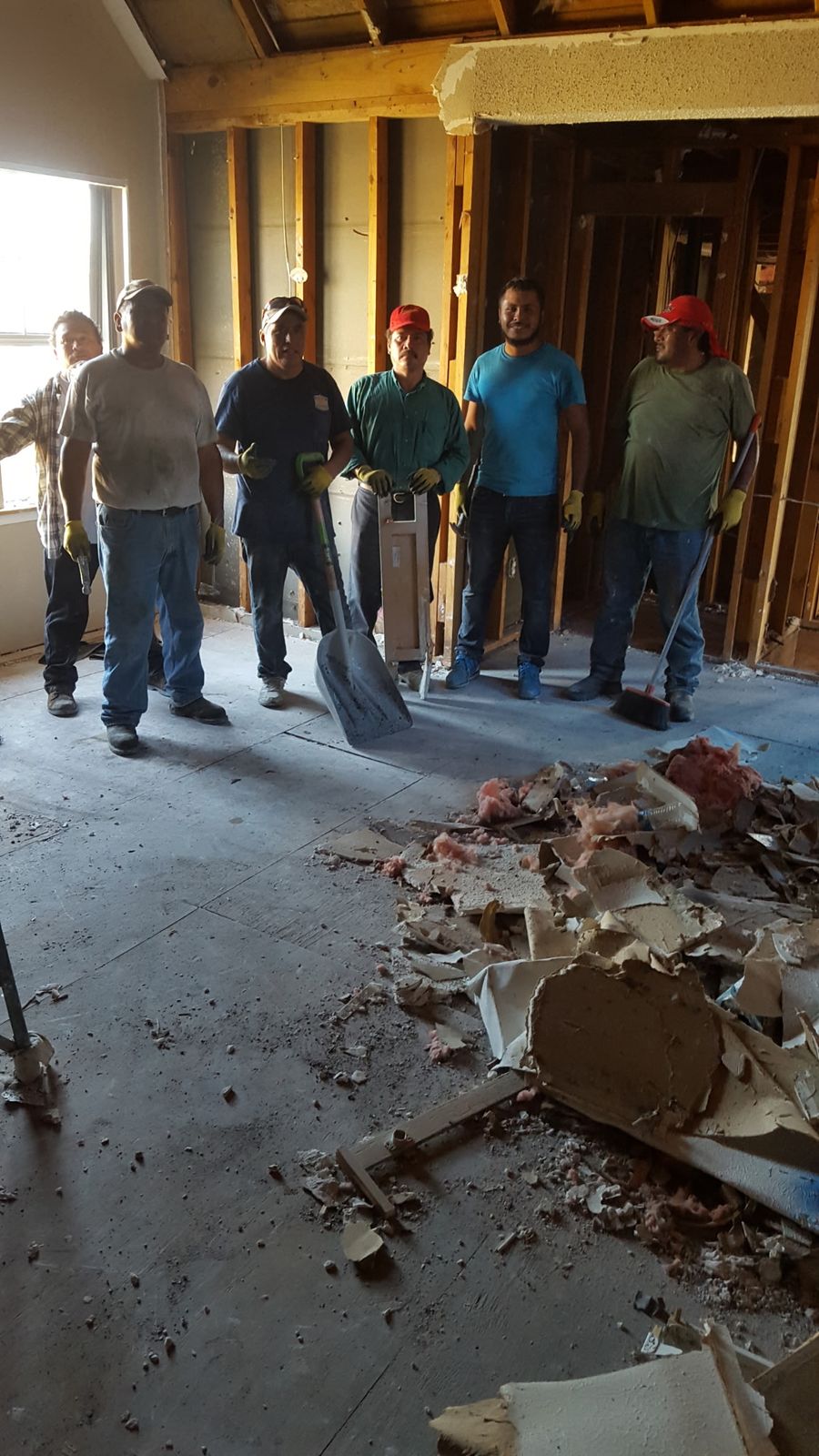
What specialists handle, and how the contractor coordinates
Some parts of a loss are not general contracting, and a careful contractor says so. Mold remediation requires a state license in Texas. Packing out and cleaning contents, and any asbestos work, belong to specialists as well. FMGC does none of these. It schedules the rebuild around them, asks for their clearance records before walls are closed, and keeps you informed of the order of work.
Working with you and your adjuster
Your insurance company sends its own adjuster to inspect the loss and write an estimate. The contractor writes a separate, itemized scope of what the repair involves and what it costs. When the adjuster visits, FMGC can walk the property with them and point out what was found, so the two documents can be compared line by line. If they differ, the difference is something you and your insurer resolve. FMGC supplies facts and photographs.
How to start
- Make sure everyone is safe and the fire department has cleared the building before anyone goes in.
- Call your insurance company to open the claim, then call us when you want the repair side scoped.
- We schedule a walk-through, normally within 24 to 48 hours, and photograph the damage.
- You receive an itemized bid. You decide whether to hire us, and your insurer decides what it pays.
Se habla español. Office: (214) 713-2443.
Guides on this site
- The first 24 hours after a fire: safety, documentation and what to keep.
- Fire and smoke damage repair: the rebuild in order, from assessment to paint.
- Water damage repair: extraction, drying, what is replaced, and why walls get checked before closing.
- Burst pipe damage repair: the first hour, what Texas insurance usually covers, and the free Burst Pipe Checklist.
- Water extraction and drying: how the water comes out, how drying is measured, and the free Water Damage Checklist.
- Emergency board-up and tarping: securing the building, temporary repairs and your claim, and the free Board-Up and Tarp Checklist.
- Storm and hail roof damage repair: after the storm, Texas deductible law, and the free Hail and Storm Roof Checklist.
- Who pays for the repair: how a claim works in general, and the red flags to watch for.
Our parent site has the free insurance claim guide for property owners.